AI for Advisors newsletter

I resisted writing about AI agents for all of 2025. The demonstrations were compelling. The technical progress was undeniable. But the operational risk was real. Agents were immature, made factual mistakes, and misinterpreted instructions. And that doesn’t even address privacy and security issues.
It would have been premature and reckless to encourage advisors to experiment with systems that couldn’t be trusted. Your time is valuable and I always kept that top of mind as I work to bring advisors safely into the generative AI era.
But over the last six months, something changed. Reasoning models improved, AI tool use became reliable, and some execution guardrails strengthened. Capabilities once confined to developer experiments migrated into mainstream platforms.
Now we have crossed a threshold. “AI agents” is no longer theoretical. It is operational and advisors need to understand what has arrived and what it means for their practice, their staff, their clients, and the profession.
What is an AI agent?
Let’s establish a precise definition before the hype obscures the concept:
An AI agent is a persistent, objective-driven system that can plan, use tools, execute multi-step actions, evaluate results, and iterate toward completion. In professional environments, it operates under defined guardrails and human supervision.
What this means in practice is that an AI agent can:
- Accept a goal.
- Plan steps to achieve it.
- Use tools (files, spreadsheets, browsing, APIs).
- Execute actions.
- Evaluate intermediate results.
- Iterate based on feedback.
- Operate under supervision.
This represents a fundamental shift from the chatbot model:
Chatbot: Prompt → Response
Agent: Objective → Plan → Tools → Execution → Review
Consider a financial advisor use case:
Chatbot request: “You are a certified financial planner (CFP) specializing in retirement and tax planning. Explain Roth conversions in clear, plain English for a beginner investor, covering what they are, how they work step-by-step, and how taxes are handled.”
Agent objective: “Review client estate documents against current family structure, identify outdated beneficiary designations, flag assets passing outside the estate plan, compare state law changes since plan creation, draft update priority memo, highlight items requiring estate attorney review.”
The agent doesn’t just answer questions. It executes structured workflows. This is supervised execution, not autonomous judgment. That distinction matters at this point.
Why this suddenly matters
Agents operate at the logic layer above traditional software, meaning the agents make workflow decisions that used to be hardcoded into software.
For decades, “Software as a Service (SaaS)” tools encoded these rigid workflows. A software programmer configured a system and the system executed predefined steps exactly as they were written. (Customization would require additional development resources.)
Agents are different. They can dynamically replicate many structured workflows without hardcoded configuration. This is why some technologists are discussing and speculating about a SaaS reconfiguration of the software marketplace, if not a possible collapse.
Last month, software stocks sold off sharply after Anthropic shipped new Claude agent capabilities and investors saw a path for agents to replace what SaaS tools charge for. The takeaway for advisors: Markets are signaling that when AI can do the work itself (not just assist), value shifts from SaaS tools to AI platforms, threatening traditional pricing models.
AI agents: From ChatGPT to browser-based automation
The whole world of AI chatbots and AI agents has matured quickly in the last 12 months. Understanding this landscape should help reduce confusion while also getting your head around the implications.
1. Agent mode inside ChatGPT (OpenAI): OpenAI’s Agent Mode can be invoked from the Tools menu in the chatbox.
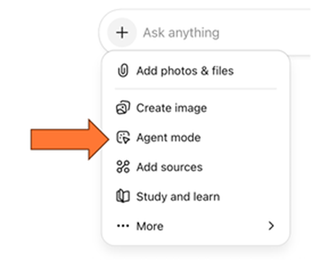
Unlike standard ChatGPT conversations, Agent Mode:
- Accepts objectives, not just prompts.
- Plans and executes multi-step workflows.
- Narrates progress as it works.
- Requests confirmation for consequential actions.
- Can be interrupted mid-execution.
- Requires workspace owner permission for access.
This is supervised execution inside a bounded environment. OpenAI has integrated capabilities from its former Operator product directly into ChatGPT’s agent functionality, consolidating the experience.
2. Atlas: The browser surface (OpenAI): Atlas is a Chromium-based desktop browser with agent capabilities embedded. The same agent stack now operates inside a live browsing session. It can:
- Open tabs
- Fill forms
- Navigate websites
- Operate within logged-in sessions
- Use browser memory
Atlas expands capability. It also increases responsibility. Browser-level access introduces privacy, governance, and compliance implications that didn’t exist when agents operated only within text interfaces.
3. The broader agent landscape: OpenAI isn’t alone:
- Anthropic’s Claude offers structured tool use and workflow execution
- Microsoft Copilot is embedding agentic execution across the Microsoft 365 suite
- Other browser-based autonomous agents, such as Perplexity’s Comet browser, are emerging
The underlying pattern is consistent: Objective → Plan → Tool Use → Execution → Iteration → Supervised Review. Differences lie in interface, permissions, and autonomy levels.
The Advisor AI Capability Curve
Advisors and their teams sit at different points on the AI adoption spectrum. Understanding where you are and where the immediate opportunity exists clarifies strategic priorities.
The Advisor AI Capability Curve
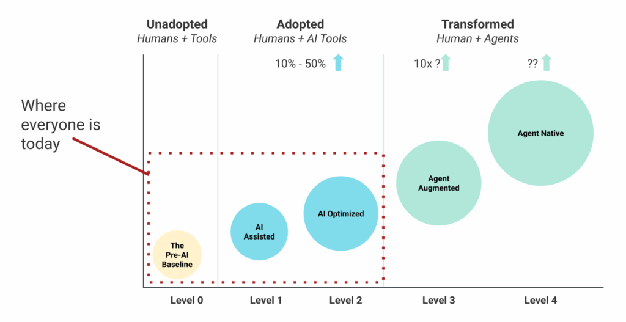
Click the image to view in detail.
Source: Aircampus.in
Level 1—Prompting: AI as responsive assistant.
Level 2—Structured Workflows: AI as structured collaborator.
Level 3—Proto-Agents: AI as supervised operator.
Level 4—Coordinated Agent Systems: AI as integrated infrastructure.
Most advisors today operate at Level 1. The opportunity in 2026 is mastering Level 2 and selectively experimenting at Level 3.
Where advisors should begin
Level 2 is where most advisory firms should focus in 2026. And the most accessible entry point is custom GPTs.
A custom GPT is a configured version of ChatGPT that you train once for a specific workflow. You set the instructions, define the tone, upload reference documents to its knowledge base, and establish how it should respond. Unlike a standard chat session, a GPT remembers your preferences across every interaction.
Think of it as creating a specialized assistant for recurring tasks—one that executes consistently without requiring you to re-explain your requirements each time. For advisors, GPTs transform Level 1 prompting (asking ChatGPT questions) into Level 2 structured workflows (having a configured system execute defined processes).
Why GPTs matter
GPTs sit between simple prompting and full agents. They don’t plan multi-step objectives autonomously (that’s Level 3). But they execute structured, repeatable workflows far more consistently than re-prompting ChatGPT every time.
For every GPT you deploy:
- Human review required before finalization
- No automated client-facing decisions without approval
- Document oversight process
- Maintain audit trail
Three high-value GPT applications
1. Meeting prep GPT
Workflow: Upload client data. Generate agenda, anticipate objections, prepare response frameworks based on your meeting templates.
Human oversight: Review agenda accuracy, validate objection scenarios, adjust framing.
2. Post-meeting summary GPT
Workflow: Input meeting notes or transcript. Draft follow-up summary, action items, and next-step emails using your firm’s standard format.
Human oversight: Verify accuracy, confirm action item assignments, approve client communication.
3. Compliance draft reviewer GPT
Workflow: Paste marketing copy. Scan for regulatory risk language, flag potential violations against your compliance guidelines.
Human oversight: Confirm flagged items, make final approval decisions, document review.
Mastering Level 2 through GPTs prepares your firm for Level 3 agent experimentation. But most firms will find their highest ROI at Level 2 for the next 12 months.
What agents are not
Agents are tools that expand capability. They do not transfer responsibility. It’s important to be be clear on GPT limitations and prevents misuse. Agents are not:
- Autonomous fiduciaries.
- Replacements for professional judgment.
- Compliance substitutes.
- A justification for reduced oversight.
As always, the human remains accountable.
The bottom line
Every advisory firm will eventually operate with AI-assisted workflows. This is not speculative. It is directional and based on what we’ve seen over the last 24 months.
So, the question is not whether agents arrive. They are here. Whether firms create AI agent supervision deliberately or scramble to add guardrails after problems emerge, is what we’ll watch closely in the next 12 months. Stay tuned.
Ready to make the leap? Horsesmouth’s AI for Advisors Pro training programs provide the structured, advisor-specific approach that transforms occasional users into confident practitioners. Learn more at www.horsesmouth.com/aipro.